Slovak Minister Makes Controversial Claims About the 1968 Prague Spring
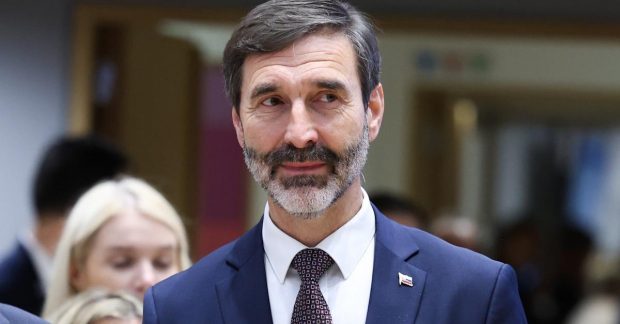
Slovakia's Foreign Minister Juraj Blanár claimed that Ukrainians were behind the 1968 Soviet-led invasion of Czechoslovakia, sparking criticism from the opposition.
 🎭Culture & Sport
Photo: UNIAN
Key points
- Slovak Foreign Minister blamed Ukrainians for the 1968 invasion.
- Opposition criticized the remarks, highlighting the role of Moscow.
- Soviet military units were multi-ethnic and lacked separate national status.
Contemporary political debates in Europe occasionally draw upon historical events of the past century to shape modern political narratives. Recently, Slovakia's Foreign Minister Juraj Blanár expressed a controversial view regarding the 1968 Prague Spring, suggesting that Ukrainians were responsible for the Soviet invasion of Czechoslovakia. During a political talk show on Slovak television, the official claimed that the first Soviet regiment to enter Czechoslovakia was Ukrainian, and that former Soviet leader Leonid Brezhnev was also Ukrainian.
Historical Context and Opposition Backlash
Such assertions prompted an immediate and sharp response from political opponents. Opposition leader Michal Šimečka strongly rejected the interpretation, reminding the audience that the Soviet Union was a totalitarian regime that oppressed all nations, including the Ukrainian people, and that key decisions were made exclusively by the Politburo in Moscow.
Historical evidence clearly refutes the concept of "ethnic" military units in the Soviet army. Military formations were drafted from across the entire USSR to intentionally prevent ethnically homogeneous units. Although the troops crossing the Czechoslovak border originated from the Carpathian Military District stationed in Soviet Ukraine, those units were neither ethnically Ukrainian nor structured under independent Ukrainian command.
Implications for the Community and Public Awareness
For Ukrainian communities, such historical myths highlight the ongoing challenge of misinformation and the distortion of historical facts in European politics. Blaming historical wrongdoings on nations that themselves suffered under totalitarianism is a recurring manipulative tactic.
Understanding the true nature of the Soviet regime remains essential for public resilience against information warfare. Citizens must critically evaluate political rhetoric that attempts to rewrite history to serve modern geopolitical agendas.
Source UNIAN — unian.ua/world/za-pridushennyam-prazkoji-vesni-v-1968-roci-stoyali-… ↗
Read next
 🛡️Security
Nuclear Blackmail and Starlink Threats: New Statements by Dmitry Medvedev
Russia's Security Council Deputy Chairman claimed Moscow has the right to a preemptive nuclear strike and threatened a 'space war' against Starlink satellites.
 💼Economy
Metallurgy Crisis in Ukraine Threatens Local Budgets and State Finances
A sharp decline in production within Ukraine's steel industry, driven by shelling, logistics bottlenecks, and energy shortages, is causing a significant drop in tax reven…
 🛡️Security
Defense Ministry Reports Surge in Russian Attack Drones and Ballistic Missile Strikes
In October, Russian forces launched over 4,000 jet-powered drones and 153 ballistic missiles against Ukraine, showing a massive escalation in air attack intensity.
 🇺🇦Ukraine
High-Profile NABU Case: Former Deputy Prime Minister Suspected of Fake Employment Scheme
NABU and SAPO uncovered a corruption scheme involving a former deputy prime minister who orchestrated the fake hiring of personal drivers and guards.
 💼Economy
Market fluctuations: Vegetables become more expensive in Ukraine while fruit prices drop
Last week in Ukraine saw a rise in wholesale prices for a number of vegetables, particularly sweet peppers and potatoes, while fruits and certain types of cabbage showed …
 🇺🇦Ukraine
Stolitsa Group Comments on Construction Plans on Honchara Street in Kyiv
The management of Stolitsa Group stated that the construction of a residential project on Oles Honchara Street will not harm the Literary Square or surrounding historic l…